As the winter months roll in and outdoor shows wind down, you might think that means a break from serious training. But for me, winter is the perfect time to focus on something both practical and different: setting up show-style trail obstacles right at home.
Trail Isn’t Just “Playing Around”
At a horse show, the Trail class challenges horse and rider to navigate a series of obstacles—just like you might encounter out in the real world—with precision, calm manners, and good communication. These obstacles can include gates, walk/trot/lope logs, bridges, back-throughs, and sidepasses, among others.
In a sanctioned show such as one under USEF (United States Equestrian Federation), Trail classes are governed by clear rules to ensure consistency and fairness across competitions. For example, in the English Division Trail Horse class, riders must complete a pattern of obstacles while demonstrating correct gaits and proper handling of each challenge.
What this means for us at home is simple: training like a competitor makes us better prepared, safer, and more confident—even if we never step foot in an arena.
Why Winter Is the Perfect Time
1. Build Confidence in a Low-Pressure Environment
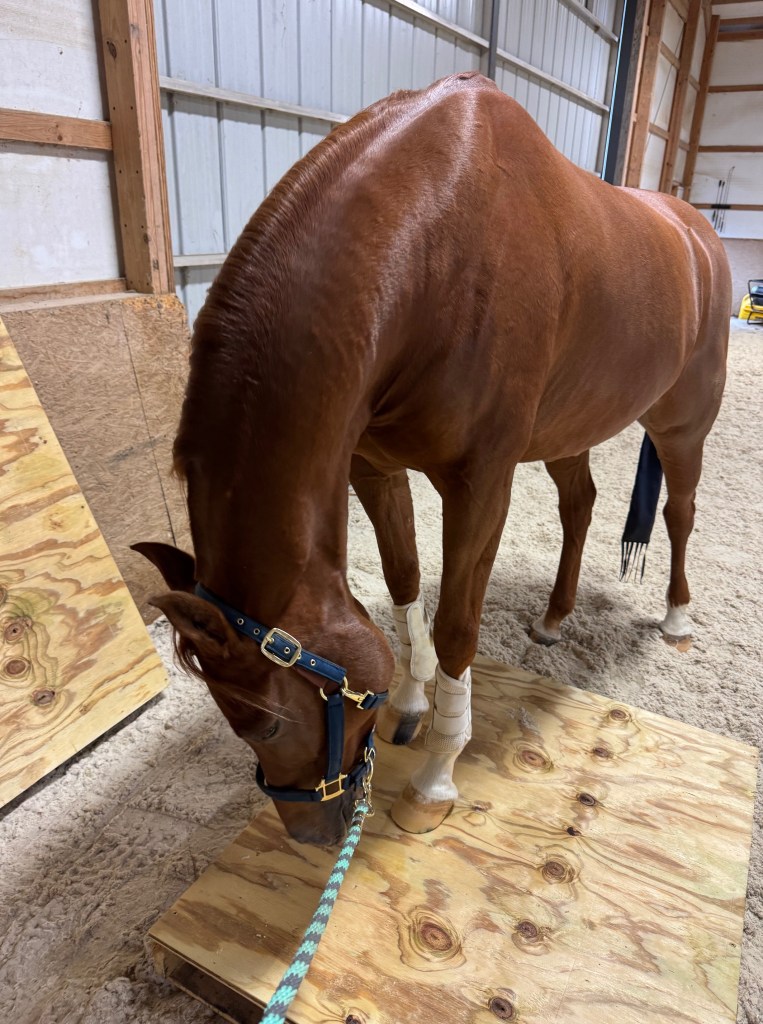
Horses are like us, or at least like me. They learn best when they aren’t rushed or stressed. Winter gives us time to create a relaxed, consistent routine. Chrome can explore obstacles again and again without the distractions of shows. This builds confidence and trust, which translates to smoother, happier performances when show season comes back around.
2. **Practice Real USEF-Style Obstacles
Even though USEF’s full Rule Book is lengthy and detailed (they update it regularly and include all disciplines and classes), trail rules are clearly defined enough to guide our training setup at home. USEF
By modeling our obstacles after those seen in sanctioned trail classes, we’re not just “playing”–we’re practicing meaningful skills that Chrome will recognize when he sees them in competition later if we ever do try to compete.
What We’re Working On (and Why Each Matters)
Here’s a snapshot of some obstacles you might see in a USEF trail course—and why I’m adding them into our winter work:
Logs or Poles at Walk, Trot, and Lope
These teach Chrome to regulate his stride and stay attentive to his feet—skills that pay off whether he’s in the show pen or on the trail. He’s been doing ground poles and cavaletti for fitness for a while, so these aren’t a big deal. It’s just fun setting them up in different patterns!
Bridge Crossing
Many courses include a bridge to walk over. This builds confidence across unusual footing and helps Chrome learn to trust his balance.
Backing and Sidepass Challenges
Negotiating tight backing patterns and sidepassing builds responsiveness and strengthens his understanding of subtle cues. It’s also helping with his lateral work for dressage.
Gate Work
Trail often requires horses to open and close a gate safely while mounted. It’s a deceptively simple skill that builds politeness, balance, and rider control. We haven’t done this one yet, but we DO have a gate! We just need the rope for it.
The Bigger Picture: Better Horses, Better Partners
Winter training with trail obstacles doesn’t just prepare Chrome for a specific class—it makes us both better. It develops:
- Balance & coordination
- Calmness under unusual circumstances
- Stronger communication between us
- Confidence walking into any new challenge
And honestly? It makes the winter season way more fun. Trail obstacles break up the monotony of arena laps and give us both something fresh to focus on.
Final Thoughts
Whether you’re gearing up for competition or just enjoy riding for fun, building a few show-style obstacles is one new thing you can do for your horse during the winter months. It’s practical, purposeful, and—best of all—it builds a stronger, more confident partnership between you and your horse.
If you’re curious about specific obstacle ideas or how to set them up safely, I’d be happy to share more details—just ask!

 Silhouette Arabians